
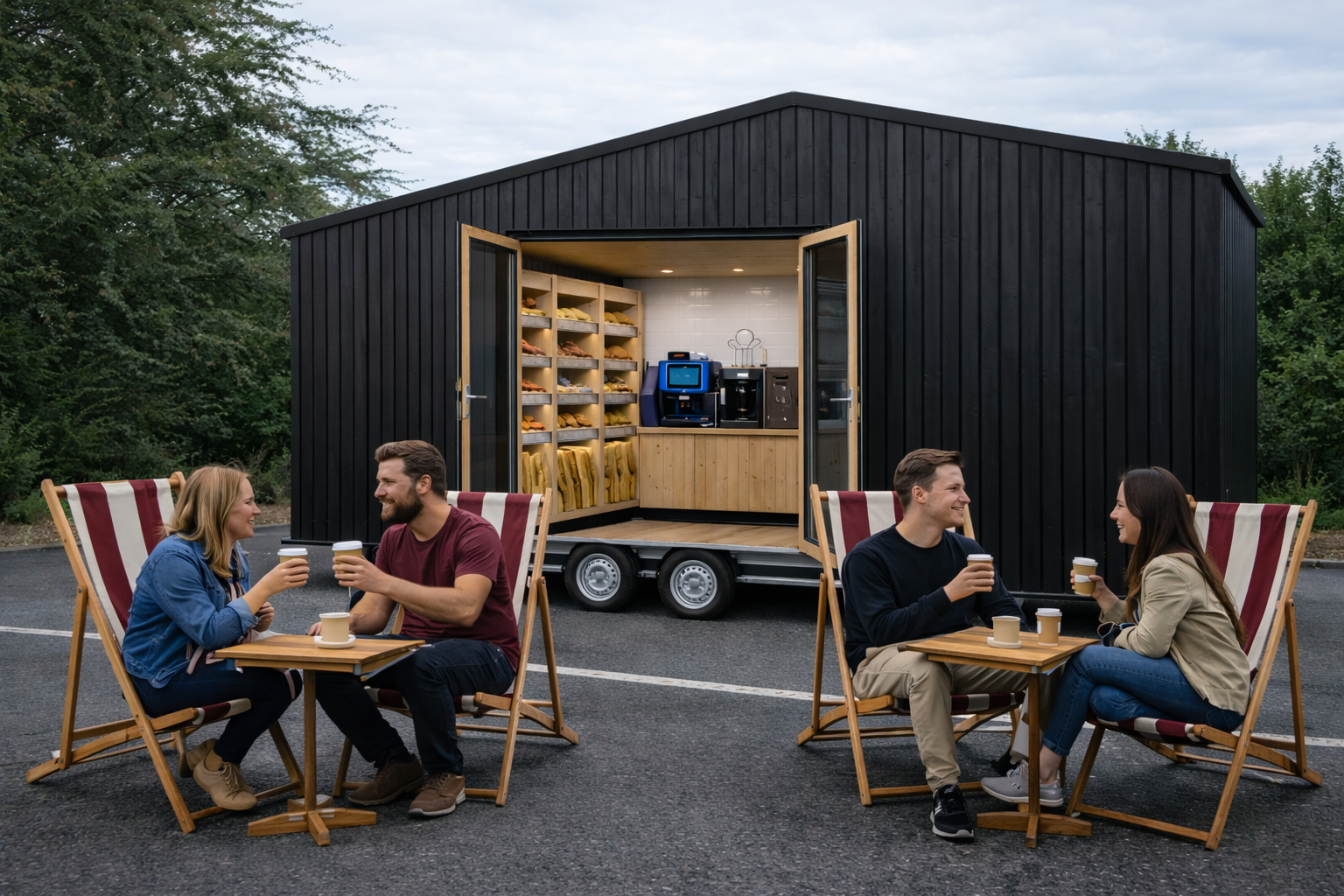
Tiny Box Coffee Shop
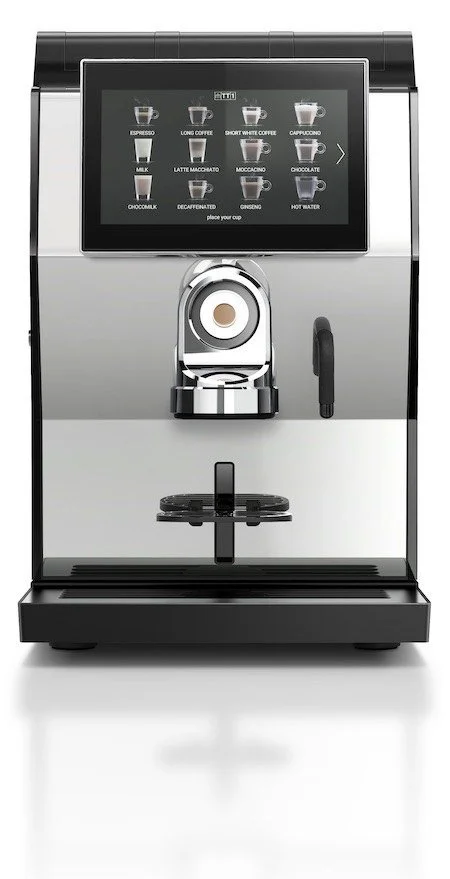
Tiny Box Coffee Shop is a highly flexible, mobile self-service café concept designed for fast deployment and easy operation. Built around a modular interior system, it can be configured with a commercial coffee machine on a dedicated station, enabling customers to serve themselves quickly and efficiently.
The unit can also be equipped with shelving and vending solutions for fresh bakery products, retail displays for snacks and packaged goods, and integrated refrigeration for cold drinks. This makes Tiny Box Coffee Shop an ideal solution for high-traffic locations, events, campuses, and hospitality destinations — delivering a complete café experience without the need for permanent construction or on-site staff.
How it works
Tiny Box Coffee Shop is a self-service coffee concept designed for modern, high-traffic locations where convenience meets quality. We supply commercial vending equipment, serving accessories, and freshly roasted single-origin coffee beans — everything needed for a complete self-serve experience. Operators spend only a few hours per week refilling supplies and cleaning the station, while customers enjoy premium coffee on demand
Revenue Model — Tiny Box Coffee Shop
Each Tiny Box Coffee Shop is designed as a compact, high-margin self-service business. With an average of 120 cups per day at €2.80 per cup, a single unit can generate over €10,000 in monthly coffee revenue, complemented by additional income from snacks and cold drinks.
With no staffing costs and only a few hours per week needed for refilling and cleaning, the model delivers 55–65% gross margins — turning every unit into a scalable, low-maintenance revenue asset.
Tiny Box Coffee Shop ideal locations
To ensure commercial success, Arboretum Haus has conducted a comprehensive analysis of where Tiny Box Coffee Shop performs best. We evaluated footfall patterns, dwell time, operational costs, and permitting complexity across a wide range of environments — from campuses and mobility hubs to hospitality destinations and public spaces.
Based on this analysis, we have identified the most effective locations for both seasonal and permanent deployment, enabling partners and operators to place each unit where demand, convenience, and profitability align. The result is not just a mobile coffee concept, but a data-informed retail infrastructure solution designed for real-world performance.
-
Examples: Universities, business schools, research parks, libraries
Why it works
High daily footfall
Long dwell time
Strong demand for quick, affordable coffee
Best model
Permanent on main campuses
Seasonal during exam periods, summer schools, conferences
-
Examples:
Fuel stations
EV charging hubs
Park & Ride zones
Bus terminals, ferry docks
Why it works
Coffee fits naturally into travel routines
EV charging creates 20–40 minutes of idle time
No need for staff — perfect for 24/7 operation
Best model
Permanent at high-traffic locations
Seasonal at holiday routes and tourist corridors
-
Examples:
Office parks
Logistics centers
Industrial zones
Construction mega-sites
Why it works
Large daily workforce
Limited food & beverage infrastructure
Strong morning and break-time demand
Best model
Permanent for stable operations
Seasonal for large projects and temporary sites
-
Examples:
Festivals
Trade fairs
Sports tournaments
Open-air markets
Why it works
Massive short-term demand
No time for traditional café setup
Self-service keeps queues short
Best model
Seasonal / pop-up only
High-margin, short deployment cycles
-
Examples:
Resorts and eco-lodges
Camping and glamping sites
Ski resorts, beach clubs
Theme parks
Why it works
Guests expect quality coffee
Mobile units avoid permanent construction
Easy relocation between seasons
Best model
Seasonal in most nature-based destinations
Permanent in high-traffic resorts and theme parks
-
Examples:
City squares
Waterfronts
Parks
Cultural districts
Why it works
Constant pedestrian flow
Strong demand for takeaway coffee
Minimal infrastructure requirements
Best model
Permanent where permits allow
Seasonal in tourist-heavy areas
-
Examples:
Shopping centers
Outlet villages
Big-box retail parks
DIY & garden centers
Why it works
Coffee increases dwell time
Low operational complexity for landlords
No need for tenant build-out
Best model
Permanent as a service amenity
Seasonal during peak shopping periods
-
Healthcare & Public Services
Examples:
Hospitals
Clinics
Government buildings
Courts
Why it works
Long waiting times
High daily visitor numbers
Self-service avoids staffing issues
Best model
Permanent in large facilities
Seasonal in temporary healthcare setups
Designed to Match Your Brand and Your Location
Every Tiny Box unit can be fully adapted to the needs of the operator. From roof typology and façade treatment to interior layout and material selection, we tailor each design to fit your concept, brand identity, and operational environment.
Whether you need a minimal, urban look, a nature-inspired aesthetic, or a fully branded commercial presence, our architectural and design team develops a solution that aligns with your visual guidelines and functional requirements — ensuring your unit performs as well as it represents your business.
Simple to Operate. Easy to License.
Every Tiny Box concept is designed for operational simplicity. Inspired by leading self-service models, our units require only minimal weekly effort — basic cleaning and restocking — with no need for permanent staff or complex daily management. This makes them ideal for operators who want a lean, scalable business model.
At the same time, our mobile, trailer-based architecture significantly simplifies the business licensing process across Europe. Because units are not permanent structures, permitting is typically faster and more flexible than for traditional construction, allowing operators to launch in new locations with less bureaucracy, lower risk, and shorter time to market.
Our Process
We do not work with fixed catalogues or standard models. Every unit is designed as a custom solution, tailored to each client’s use case and brand — and built on our digital design and architectural system. This allows us to combine the flexibility of bespoke architecture with the speed, cost control, and reliability of industrial production.
Select the Trailer Size
Choose the trailer format that defines the footprint and mobility of your future unit.
Configure the Equipment
Select the technical features and systems you need — from utilities and climate control to furniture and built-ins.
Design the Exterior and Interior
Customise finishes, layouts, and roof typology to match your brand, use case, and aesthetic vision.
Confirm Production & Delivery
Finalize the configuration and sign the contract to initiate manufacturing and schedule delivery.